Gravity Decline Roller Conveyors

Unlike standard conveyors, Gravity Decline Conveyors rely on gravity to move products. When height and conditions allow, gravity simplifies conveyor operation. These conveyors typically include two bearer beams with idler rollers between them. Engineers confirm the decline angle experimentally based on product type and desired speed. If product characteristics vary too much, such as sacks versus boxes, we recommend a standard decline conveyor instead. Gravity decline conveyors provide a simple, cost-effective solution for many applications while maintaining smooth product flow and reducing energy consumption. Operators benefit from reduced maintenance and minimal operational adjustments compared to powered conveyors.

1 - Straight Gravity Decline Roller Conveyor
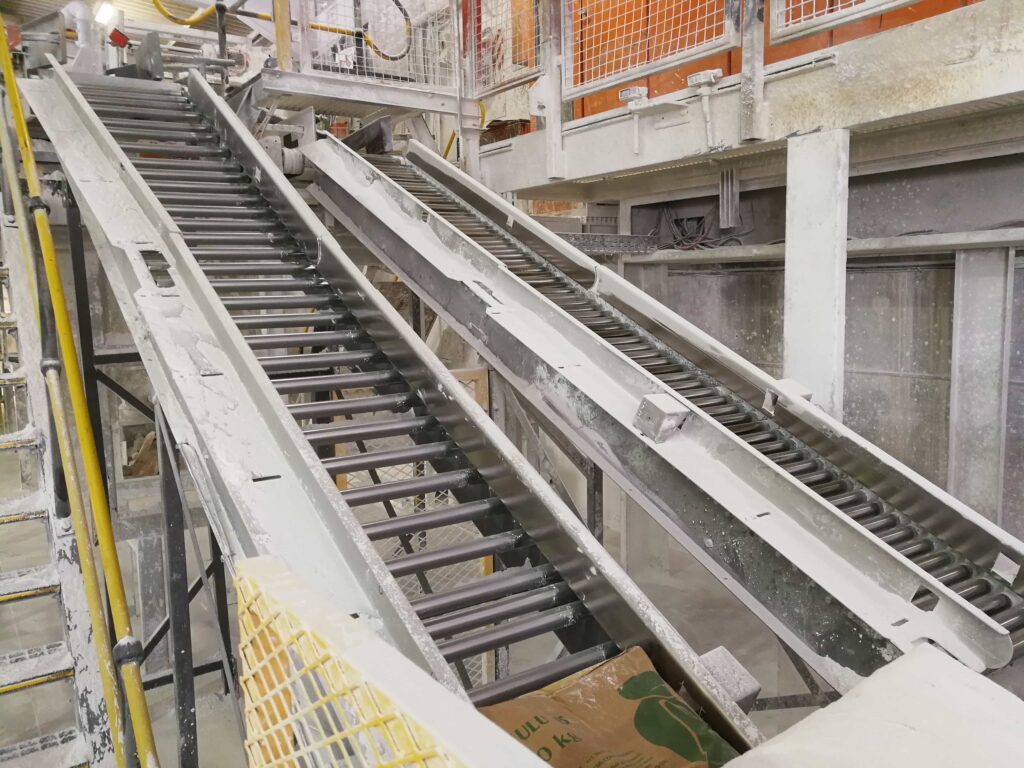
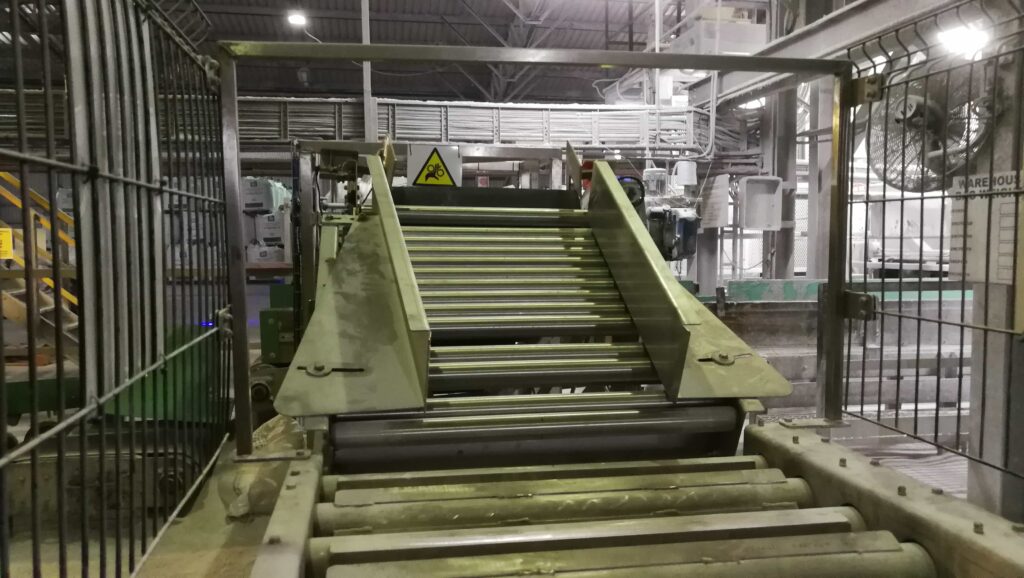
The most common type of gravity decline conveyor uses rollers sized according to the rolling resistance of the transported products and available installation space. Environmental factors such as dust accumulation, humidity, and hygroscopic effects can gradually reduce free roller motion. These conditions may affect the long-term performance of the conveyor, so engineers account for them during design. Regular inspections and preventive maintenance ensure consistent operation. Choosing the correct roller diameter and spacing maintains speed and reliability, even under varying environmental conditions. Properly designed gravity decline conveyors reduce downtime and improve overall line efficiency.

The characteristics of the packed product largely determine whether it maintains alignment without rotating during movement. Where standard side guides cannot be used and sufficient elevation exists, a short straight gravity decline roller conveyor section provides an effective solution. Designers typically incorporate a side or tip-over guide to maintain product stability. By controlling alignment, the conveyor prevents product damage and ensures smooth flow to the next process stage. Proper alignment reduces jams and minimizes the risk of misloading downstream equipment, enhancing overall line performance.

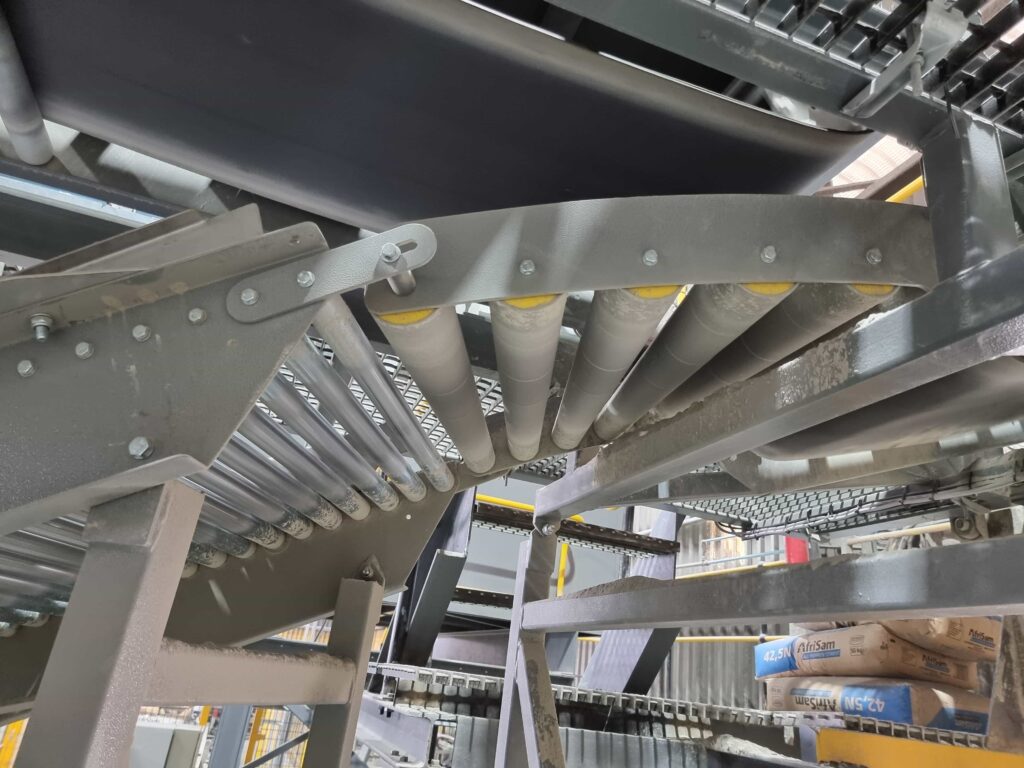
Driven bends are considerably more expensive than gravity taper roller bends. Typical directional changes reach up to 90°, though engineers can accommodate larger angles if needed. Short gravity bends reduce the importance of the effective decline angle between inner and outer tracks, provided the slope is sufficiently steep. Engineers calculate the required roller length and resulting path width according to the packed product’s dimensions. Correctly designed bends maintain smooth motion and prevent product jamming, even when handling irregularly shaped items. Gravity taper bends provide a reliable, low-cost solution for minor directional changes on decline conveyor lines

A spiral decline conveyor functions as a curved gravity conveyor that changes direction beyond 180°. Its main purpose is to reduce height in confined spaces where a straight decline cannot fit. Designers carefully determine the effective decline angle for both inner and outer tracks to prevent product runaway. Depending on product characteristics, taper rollers may be replaced with standard parallel idler rollers. Side guides may also be added based on the application. Spiral gravity decline conveyors allow compact layouts without sacrificing flow stability, ensuring reliable operation in restricted areas.