Bottom Sheet Placer
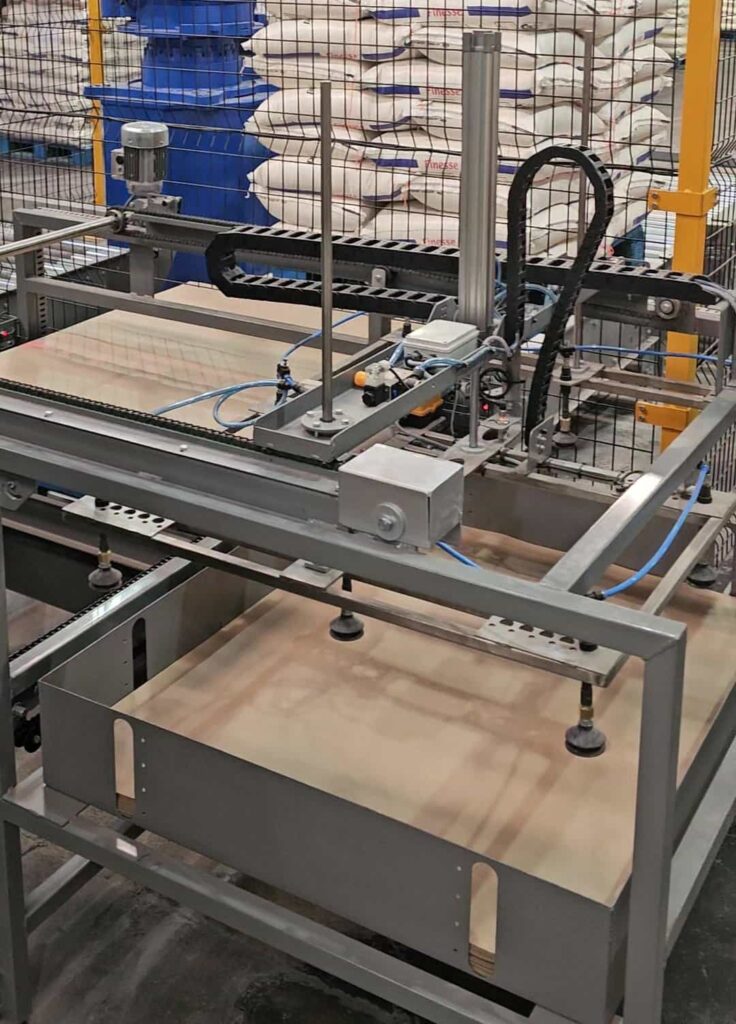
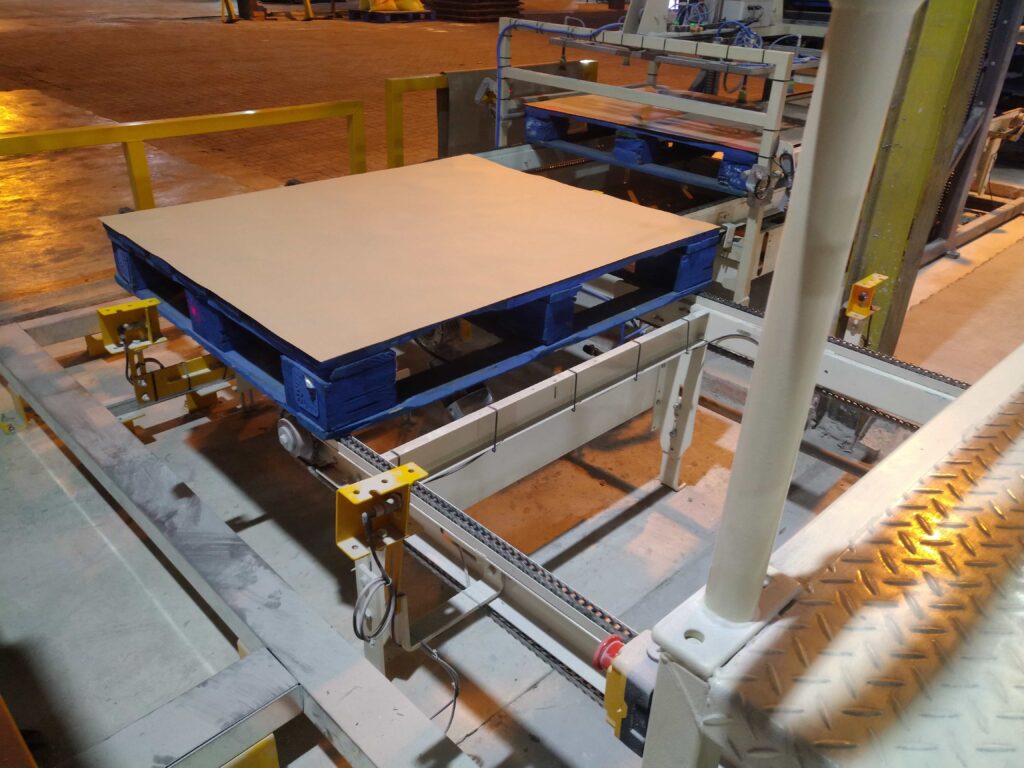
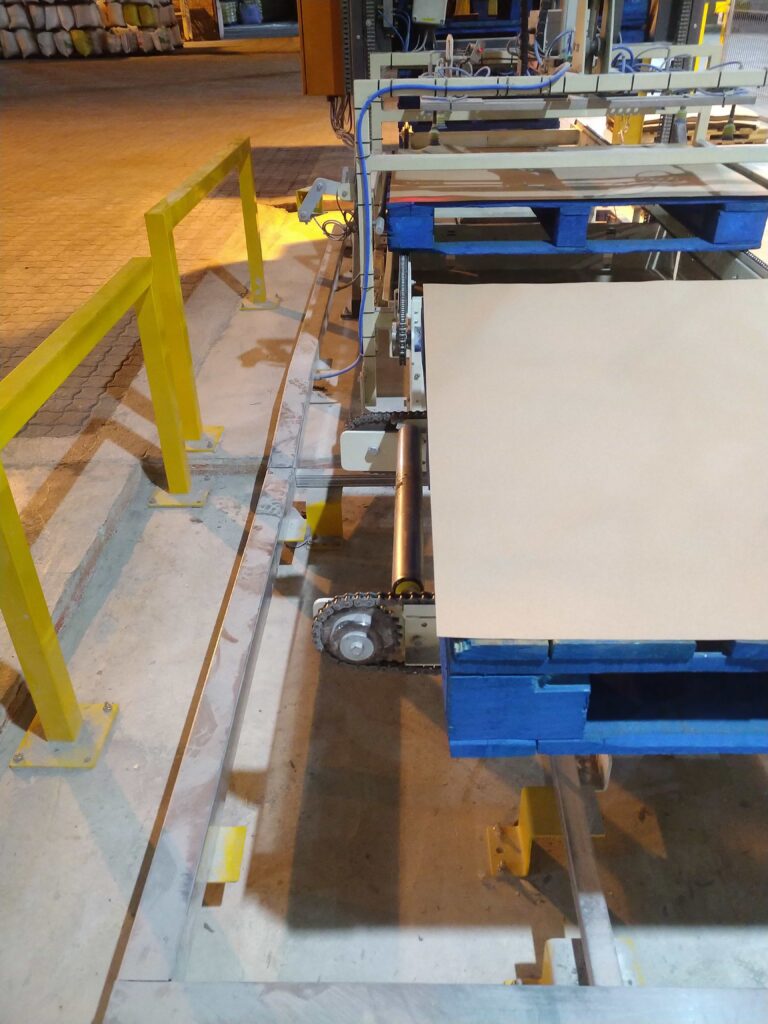
A bottom sheet protects the pallet’s surface before loading products. It prevents goods from sliding and keeps them stable during transport. The sheet also shields products from scuffing, moisture, and other potential damage. It absorbs shock from handling or the pallet itself, protecting fragile or stacked goods. Using a bottom sheet reduces product loss, maintains quality, and ensures safer handling throughout the supply chain. Companies can rely on this simple yet effective layer to improve safety and efficiency on their packing lines. Our Automatic Bottom Sheet Placer picks up a pre-cut sheet from a drawer and moves it precisely across the pallet. It places the sheet accurately every time, ensuring complete coverage of the pallet surface. Operators can focus on other tasks while the system runs, maintaining high-speed pallet preparation. The unit handles up to 120 sheets per hour, making it suitable for high-volume production lines. Additionally, it reduces human error and guarantees consistent placement. This consistency improves product stability during stacking and protects goods during transport.
The sheet’s permeability affects the system’s performance. If the sheet is too porous, vacuum suction may accidentally pick up multiple sheets. Conversely, if the sheet is too sealed, the separation vacuum can lift several sheets together, causing misplacement. To prevent this, the Automatic Bottom Sheet Placer operates at a controlled speed and uses a gentle shaking motion during the pick. This approach ensures that each sheet is handled individually. It maintains accuracy and efficiency across all pallet sizes and sheet types. The Automatic Bottom Sheet Placer integrates seamlessly with existing palletizing lines. Its robust design accommodates various sheet sizes and thicknesses. This flexibility allows businesses to adapt quickly to different product types. By consistently placing sheets, the system protects products, reduces handling damage, and improves overall line productivity. Furthermore, automation decreases operator fatigue and increases throughput. Companies can achieve higher reliability, better safety, and more predictable packaging outcomes by using this solution.